








I’ve been in Mayotte for two weeks now, and it feels like I just got here. On board, any sense of time completely disappears, and the days fly by. I think it’s time to set sail. If I go too long without sailing, my body gets used to the rhythm of life on land really quickly, and then I have a hard time getting back into sailing mode. The transitions are uncomfortable; I tend to overthink things, and that sense of insecurity creeps in. That’s when I miss my loved ones the most. After a few hours—or sometimes days—I regain my spirits, refocus, and enjoy myself, just like I almost always do.
Mayotte has been a much-needed stop to recharge my physical energy and carefully plan the next steps on the way to South Africa. The Mozambique Channel must be treated with the respect it deserves. I’ve spent hours reading on deck about the upcoming legs of the journey. I always enjoy planning my next moves: studying the local weather, plotting the course on a paper chart, planning emergency anchorages… I’ve also taken the opportunity to go on long walks around the island. By the way, I have to remember to set sail with the water tank filled to the brim, because I’ve noticed that the water in Madagascar—due to the rivers—contains a lot of sediment and is brown. I won’t be able to turn on the water purifier to produce fresh water. I’ll have to keep that in mind.
During the meals I have on deck, I watch the ferries maneuver: how they arrive, unload cars, load cars, and leave. The current is quite strong, and maneuvering can’t be easy; however, there are no mistakes—they’ve got it down pat. Mayotte’s two largest towns are on different islands, and the ferry connects them. I can hear them until the wee hours of the morning, every day of the week. Around 2:00 a.m., service stops, and they moor to a buoy about 350 meters astern of the Sofía.
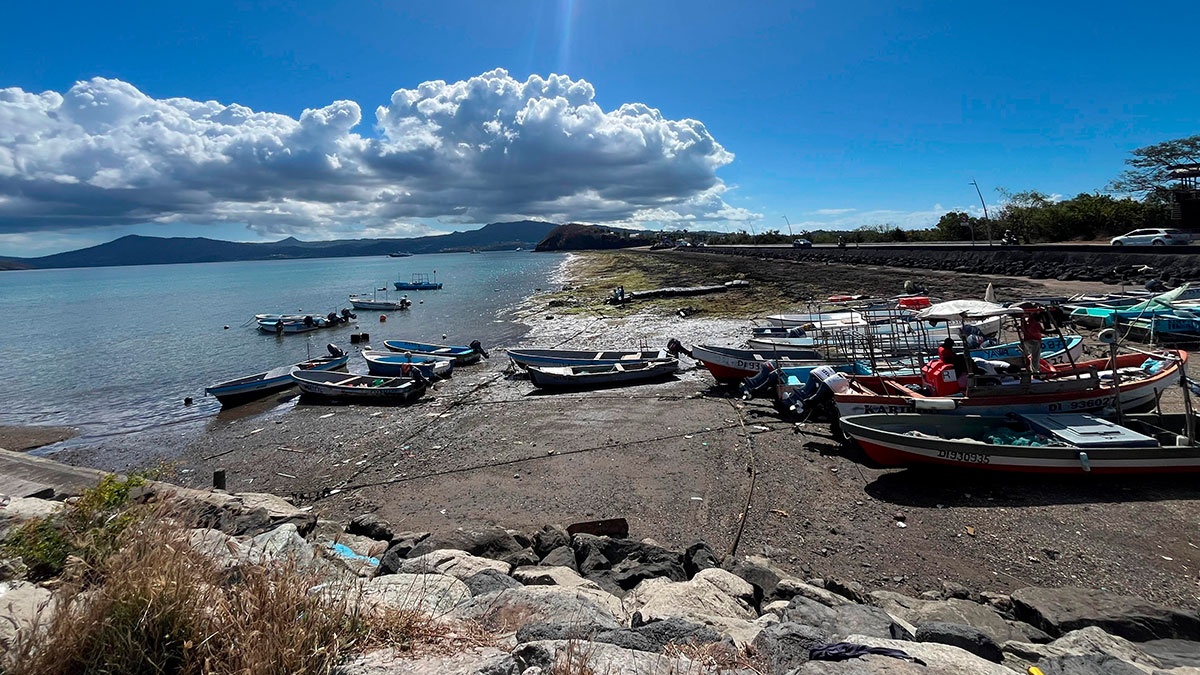
Here, the local winds follow a clear pattern. The wind blows at about 10–13 knots throughout the day and dies down to 5 knots at sunset. At night, the air cools off, and I sleep without fans. The wind direction is consistently from the SE. Mayotte, being an island surrounded by a reef, has a significant tidal range of about 2–3 meters. When the inner lagoon empties, the tide goes out, and when it fills, the tide comes in. The current is strong, and all the boats in the area drift with it.
I’m starting to leave the tropical climate and the trade winds behind and heading toward latitudes where I’ll have to navigate between weather systems forming to the south. I have to carefully calculate the good weather windows to take advantage of them and make progress southward. I’m nervous, but at the same time, I’m looking forward to sailing in this kind of weather. It’s very different from the winds in the tropics, and strategy plays a crucial role. The forecast is constantly changing, and having backup anchorages, if necessary, is vital. Oh, and once I leave the tropics, I won’t have the excuse of “working at a tropical pace” anymore.
My failed mission here in Mayotte was to get cooking gas cylinders. I thought that, since Mayotte is a French overseas territory, I’d be able to refill them—they’re made in France. It turns out they don’t use the same system, so I’ll have to make do with what I have left on board. I won’t have another chance to try until I reach South Africa. It’s because of things like this that I miss the conveniences we have when living on land. Logistics is also part of ocean sailing.
The last time I refilled them was in a remote village in Malaysia where, against all odds, they agreed to do the job. It was done out in the open: they screwed a homemade regulator onto my tanks and, using a hose connected from the regulator to another Malaysian-made tank, began filling all my tanks. For 3 euros per tank, I had enough gas to cook with for the next six months. Victories like this really boost your spirits, because getting to that village was no easy feat.
Early next week, I’ll set sail for Madagascar and leave the Sofía at sea. I just need to go buy some diesel, run one last load of laundry, and pick up some fresh food. My retreat in Mayotte is coming to an end. I feel it’s time to set sail, but another part of me would love to stay a few more weeks and enjoy this retreat. Madagascar lies ahead of the Sofía.


