







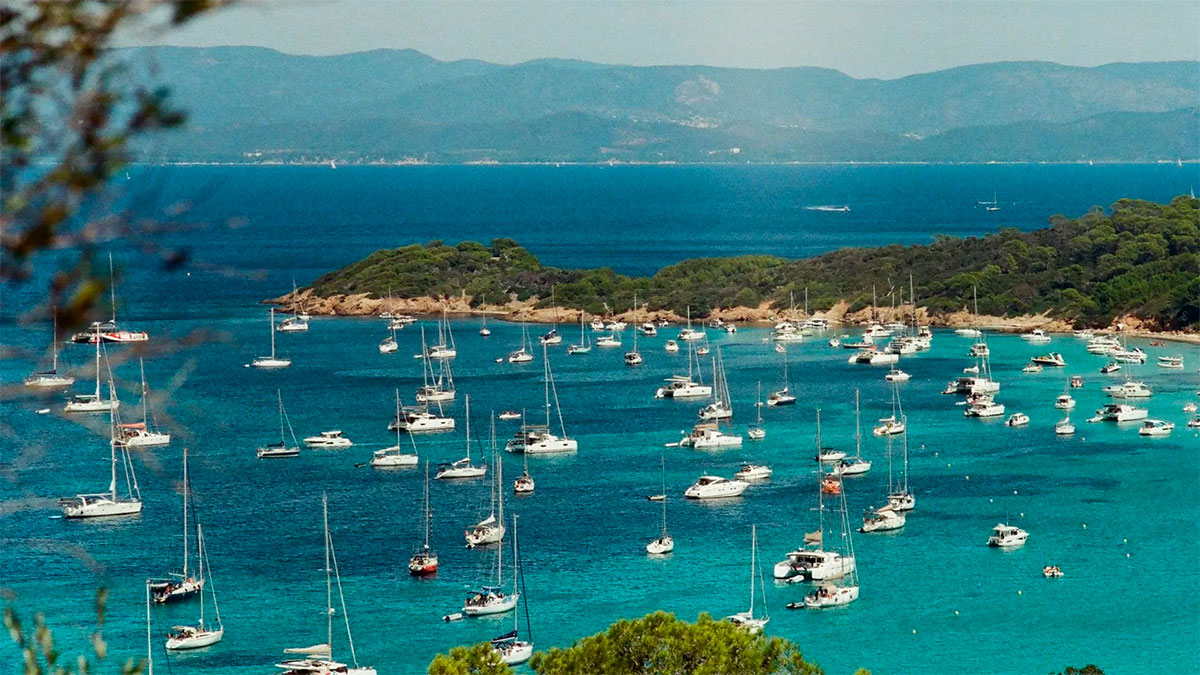
At first glance, there seems to be no shortage of space in the Mediterranean. How could there be? There are thousands of kilometers of coastline, countless remote islands, and more blue water than most visitors could explore in a lifetime.
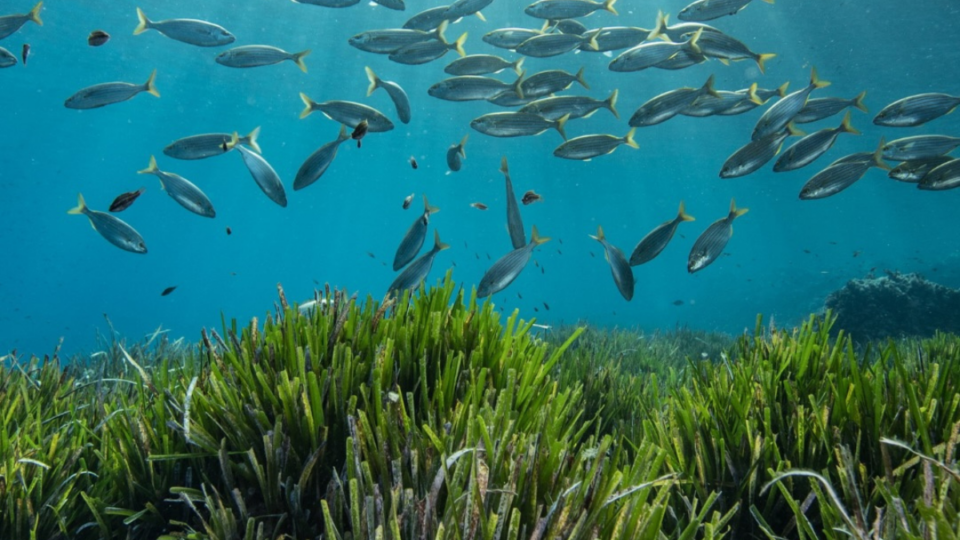
But for the superyachts that arrive each summer, the geography is less forgiving. The best anchorages (sheltered from the wind, close to the coast, and with sufficient depth for large vessels) are limited, and most are off-limits to anchors that could damage the prized Posidonia seagrass meadows growing beneath the surface.
Add to this an industry that a) continues to grow and b) is building ever-larger ships as owners sell and upgrade their vessels—does anyone else think of matryoshka dolls?—and marine parks face a dilemma. And that tension has also taken on a political dimension. In June, several French lawmakers proposed banning private yachts 50 meters or longer from France’s ports and territorial waters. It is unlikely that the measure will become law as currently proposed, but it reflects growing scrutiny—I would even go so far as to say a certain degree of rejection—toward the superyacht industry.
The number of superyachts visiting protected areas is increasing, but damage to Posidonia is plummeting
The good news is that marine parks are already working on a response, according to Madeleine Cancemi, director of the Cap Corse and Agriate Marine Nature Park.
The number of superyachts visiting Corsica’s protected areas increased between 2020 and 2025, according to Cancemi, but the proportion of yachts that anchored over the protected Posidonia beds fell from 35% in 2019 to 6% in 2025. It’s not perfect, but it’s an early indication that regulation can change yacht behavior without necessarily driving them away.
“Large vessels are not, in principle, incompatible with conservation goals,” says Cancemi. “However, such compatibility requires that activities be carried out in compliance with environmental regulations and that practices be adapted to the sensitivity of marine ecosystems.”

Other marine parks are adopting a similar approach. Port-Cros National Park is developing new mooring infrastructure around Porquerolles, supplemented by “smart buoy” technology; in the Balearic Islands, authorities have combined new eco-friendly anchorage areas with 20 new patrol boats to monitor restricted zones.
“There is a safety issue when yachts gather in the same area.”
But these changes have not always been well received by crews. Camille Medina, EU charter fleet manager at Hill Robinson, notes that the anchoring restrictions in Pampelonne, near Saint-Tropez, and the measures to protect Posidonia in Corsica and the Balearic Islands were “very frustrating” for captains and shipowners when they were first introduced.
“It remains a problem today, as most of the larger yachts can barely find a place to anchor,” explains Medina. There is also a natural “safety concern,” he notes, whenever there is a high concentration of yachts in the same area, as this increases the likelihood of incidents—including collisions—in adverse weather conditions.

It’s a reasonable argument, although the yachting industry is gradually coming to terms with the new status quo. Harald Van Exem, executive vice president and director of yacht services at Fraser, argues, however, that this structured framework offers crews a respite from the usual “daily scramble for an anchorage.”
“When an area like Porquerolles or La Maddalena transitions from being a free anchorage to a structured management network, captains gain operational predictability,” he explains. “Guests also enjoy a much more exclusive and peaceful environment, free from the noise and disruption of unregulated traffic.”
Despite the restrictions, demand in the Mediterranean remains strong
Some yachts are already designed for this new reality. The 262.6-foot (80-meter) Artefact is a good example: it features hybrid propulsion and dynamic positioning that eliminates the need to anchor, as do the 254.7-foot (77.6-meter) Yersin and the 194-foot (59.1-meter) Akula. If restrictions become widespread, these design features could quickly go from being a novelty to a necessity.
Nor does it appear that owners are backing down. Medina explains that the industry “expected” the stricter restrictions in southern France—and the higher associated costs—to reduce demand, but the area has remained one of the “most sought-after” destinations for charter flights.

“In many cases, owners are relieved to know that these protections exist,” adds Pierrik Devic, a charter broker at Fraser. “Clients are looking for crystal-clear waters, exceptional diving, and calmer anchorages—these are the things we need to protect.”
The Mediterranean doesn’t have to choose between superyachts and conservation. But reconciling the two will require more than just telling captains where they can’t anchor. It will be necessary to build the infrastructure needed to offer large yachts alternative destinations and to convince an industry accustomed to the open sea that, in the Mediterranean, space is not as limitless as it seems.